
When Is a Venture a Deep Tech Startup?
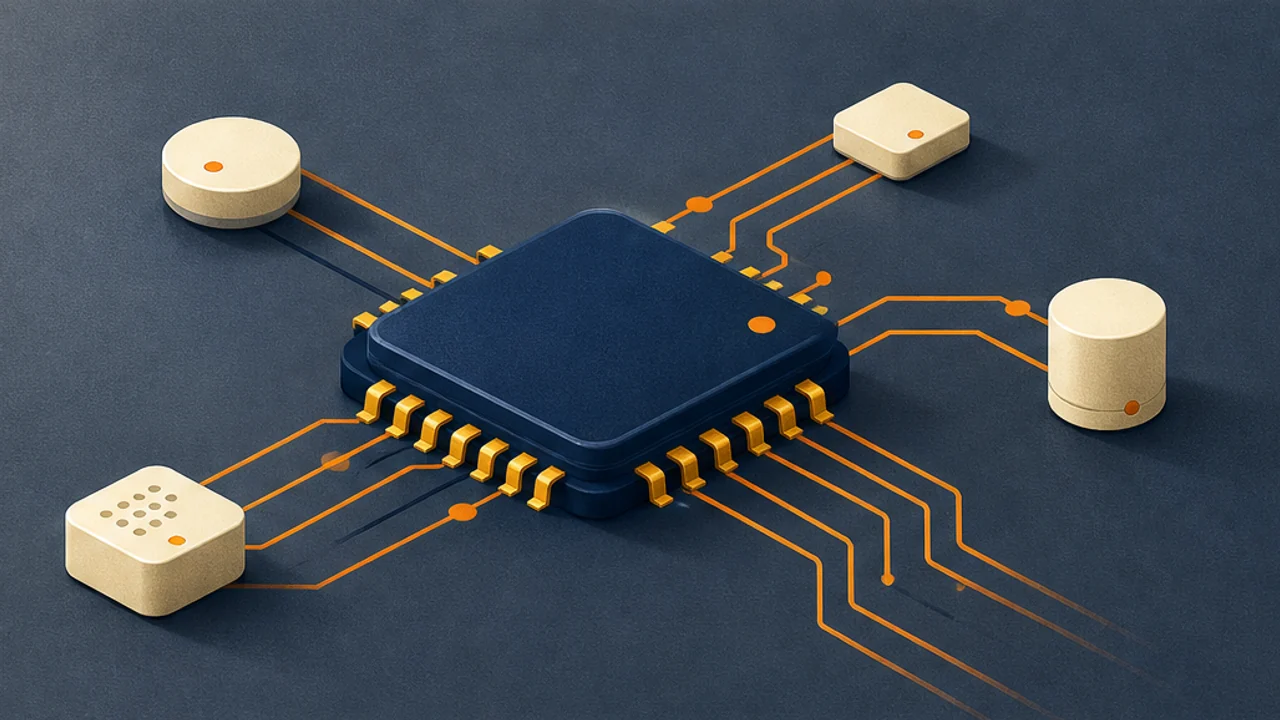
What makes a venture a deep tech startup, and how should that change its plan?
A deep tech startup depends on solving a meaningful scientific or engineering challenge, not just packaging familiar technology into a product. That creates uncertainty around feasibility, hardware and validation, so you should plan to test the underlying technical assumptions alongside customer demand, then build product and operations around what those tests reveal.
The distinction is the source of uncertainty
A startup is not deep tech simply because it uses advanced software, AI or complex infrastructure. The defining question is whether the product depends on a technical capability that still needs to be proven. That might involve new materials, sensing, robotics, communications, computation or a combination of software and physical systems.
A software-led startup can still have difficult product and market risks. It may need to find a clear customer need, earn trust, integrate with existing systems or build a reliable service. But it can often test an early product using established technical building blocks. A deep tech venture has an additional question to answer. Can the underlying technology work well enough, in real conditions, to support the product at all?
That difference affects how you define progress. A polished interface or a growing list of features may say little about whether the core technical idea is viable. You need evidence that the hard technical assumption is moving from possibility toward a product that someone can use and support.
See also what EZ Dev delivers.
How the plans differ
| Planning question | Software-led startup | Deep tech startup |
|---|---|---|
| Main uncertainty | Whether customers need the product and will adopt it | Whether the core technical capability can meet real product needs |
| Early evidence | Customer feedback from a prototype or MVP | Technical tests alongside customer and use-case validation |
| Product boundary | Often defined mainly by software features and workflows | May depend on software, hardware, science and operating conditions |
| Iteration | Changes may be made within the software product | A change may affect devices, experiments, manufacturing or deployment |
| Timeline planning | Can focus on product delivery and adoption milestones | Must allow for technical learning and dependencies before product milestones |
| Key early risk | Building something without a strong customer need | Building a product plan around a technical assumption that remains unproven |
Choose the plan that matches the hardest unknown
Choose a software-startup plan when the core capability is already technically understood and your main unknown is whether a particular audience wants the product. Your early work should make it easy to test a focused use case, learn from users and change the product without carrying unnecessary complexity. An MVP can be useful here, provided it tests a real customer assumption rather than just demonstrating that a team can ship.
Choose a deep tech plan when the product depends on a capability that is not yet demonstrated in the intended conditions. Start by writing down the assumptions that could invalidate the product. For example, a sensor might need to perform in a difficult environment, or a model might need to run within limits imposed by a physical device. Build tests that address those assumptions before treating the full product roadmap as dependable.
Some ventures sit between these categories. They may use established technical components in a novel combination, or have proven software but uncertain hardware integration. You do not need to settle the label before taking action. Identify which uncertainty could stop the product from working, then make that the first planning priority.
A deep tech company still needs customer discovery. Technical progress does not prove that a buyer has a compelling problem, that the product fits a real workflow or that deployment is practical. Run those conversations and tests in parallel where possible, while keeping the evidence from each track distinct.
Turn uncertainty into a working plan
- State the critical assumption. Write one clear sentence describing what has to be true for the product to work. Make it specific enough that a test could support or challenge it. Avoid turning a broad ambition into a technical milestone that has no observable outcome.
- Design the smallest useful test. A POC should answer a question, not imitate a finished product. Decide what result would change your next decision, what conditions the test must represent and what evidence you will record. If a test uses simplified conditions, state what it does not establish.
- Map physical and operational dependencies. List the parts of the plan that depend on hardware, suppliers, installation, data access or field conditions. Think through what happens if one dependency takes longer or changes. For embedded software development, include the device and its operating environment in the product plan rather than treating them as later integration details.
- Separate proof from readiness. A technical demonstration may prove that one capability can work under specific conditions. It does not automatically show that the system is maintainable, usable, safe to operate or ready to scale. Track those questions as later validation work instead of implying that a successful demonstration has answered them.
Plan for the Israeli context without assuming one path
In Israel, a founder may be building for civilian markets, defence-related use or both. A capability with potential across those settings can create a wider set of possible use cases, but the needs and operating conditions may differ. Treat each intended setting as its own validation question. Do not assume that evidence from one environment settles customer, integration or deployment questions in another.
If your plan involves an Israel Innovation Authority program or another support framework, keep that consideration separate from the technical case for the product. The venture still needs a clear account of what is unproven, what you plan to test and how each result changes the next step. This keeps the product plan anchored in the work itself rather than in an assumed route to support.
See also our projects.
Bring in the right expertise at the right boundary
A founder does not need to solve every engineering question alone, but should stay close to the decisions that shape the business. You should be able to explain which assumption is being tested, why the test is credible and what will change if it fails. That understanding helps you distinguish a genuine technical constraint from a preference about implementation.
A software partner is most useful when it can connect technical choices to the next business decision. For example, the team may need to build a POC, review an existing architecture or decide what belongs in the first product boundary. EZ Dev provides consulting, development and project management, and builds custom software for startups and businesses across web, mobile, server and embedded systems. Its approach includes technical and business reviews, architecture and code reviews, and focused testing when accelerating a POC or MVP.
For complex systems, maintainability matters even while the technology is still being proven. Clear architecture and documentation can make the system easier to understand and extend as the evidence changes. The goal is not to design a final platform before you know what works. It is to avoid choices that make the next experiment unnecessarily hard or make a successful experiment difficult to turn into a product.
Before approving a roadmap, ask which assumption could invalidate it, how you will test that assumption and what decision follows from each possible result.
Key takeaways
- Deep tech is defined by unresolved technical feasibility, not by how sophisticated the product sounds.
- Test customer demand and technical feasibility as separate questions, and connect both to product decisions.
- Make hardware, embedded software and real operating conditions part of the plan from the start.
- Treat a POC as evidence for a specific question, not as proof that the full product is ready.
Frequently asked questions
Does every deep tech startup need hardware?
No. A deep tech startup may depend on scientific or engineering work in software, computation or other technical areas without building a physical device. Hardware matters when it is part of the product or its operating environment, and then it should be included in validation and planning early.
How should a founder choose between a POC and an MVP?
Choose a POC when the key question is whether a technical capability can work under relevant conditions. Choose an MVP when the core capability is sufficiently understood and you need to test a focused product use case with users. If both questions remain open, define separate tests so customer evidence does not get confused with technical proof.
See also contact us.